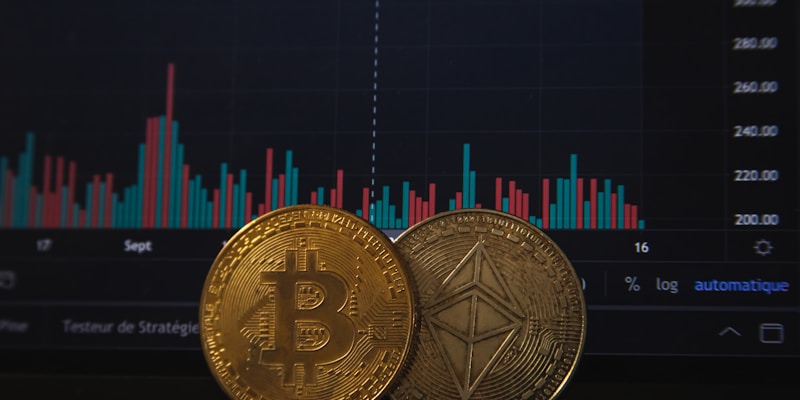

The crypto market experienced significant downward pressure on April 2, 2026, with Bitcoin and Ethereum prices falling amid global economic uncertainty. Oil prices rose more than six percent, climbing above $103 per barrel, historically signaling inflationary pressures and economic instability that leads investors to pull capital from riskier assets like cryptocurrencies.
Ethereum managed to hold above $2,000 recently, even as its network activity remains near all-time highs, presenting an interesting dynamic where robust underlying network activity doesn't immediately translate into price appreciation during market downturns. This disconnect can be attributed to broader market sentiment, profit-taking by large holders, and the prevailing risk-off environment.
A major political speech triggered a crypto sell-off, coinciding with the jump in oil prices, highlighting that while cryptocurrencies aim for decentralization, they are not entirely immune to global political and economic currents. The intertwining of global events, from geopolitical conflicts to commodity price surges, with cryptocurrency valuations necessitates a holistic approach to market analysis.
Technological advancements and potential quantum threats also add layers of complexity and risk, especially for established proof-of-work chains like Bitcoin and Ethereum. Price action is influenced not just by supply and demand within the crypto ecosystem, but also by external economic indicators, geopolitical events, and evolving technological landscapes.