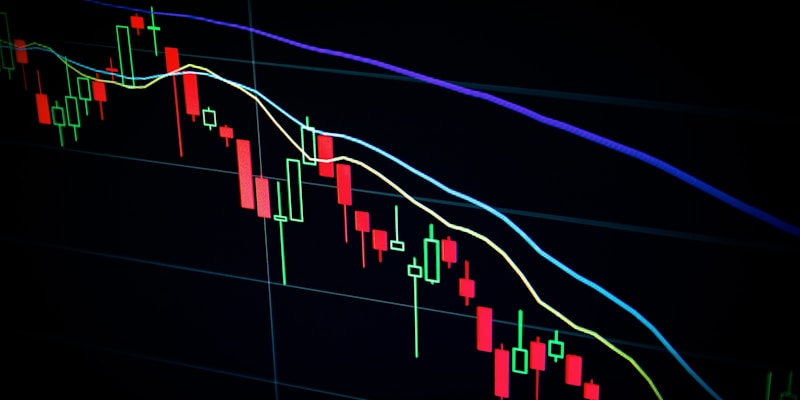
Market Overview The DOGE/USDT market has been experiencing a decline in recent days, with a 24-hour change of -1.82%.
The price is currently trading at $0.0912, which is near its 30-day low. The high and low for the day are $0.0949 and $0.0906 respectively, indicating a relatively narrow trading range.
The volume for the past 24 hours has been around $75M, which is lower compared to previous days. This could be an indication of decreasing market interest or participation. However, it's essential to note that this data alone does not provide conclusive evidence of a bearish or bullish trend.
Order Flow and Sentiment Looking at the order flow, we see a mix of buy and sell orders in the current price range.
However, there is a slight bias towards selling, with more aggressive sellers entering at lower prices. This could be an indication that some traders are looking to take profits or cut losses.
The sentiment for DOGE/USDT has been relatively bearish over the past few days, with many analysts predicting further declines in price. While this can be a self-fulfilling prophecy, it's essential to analyze other market indicators before making any trading decisions.
Key Levels For DOGE/USDT, we have identified several key levels that could impact price action.
The resistance levels for the next few days are:
* R1: $0.0942 (previous high) * R2: $0.0968 (50% Fibonacci retracement of recent decline) * R3: $0.0994 (200-period moving average)
The support levels are:
* S1: $0.0906 (current low) * S2: $0.0882 (20-day exponential moving average) * S3: $0.0858 (previous low)
Trading Recommendation Considering the current market conditions and key levels, we recommend a short-term bearish approach for DOGE/USDT.
Traders can consider selling at the current price or slightly above it, with a target of reaching the support levels.
For a more conservative approach, traders could set their stop loss just below the S1 level ($0.0906) to limit potential losses in case of a short-term reversal.
Risk Factors As with any trading decision, there are risks associated with this approach.
The most significant risk is that the market may not move as predicted, and prices could spike unexpectedly. Additionally, there is always a risk of slippage or liquidation when using leverage.
To mitigate these risks, traders should only invest what they can afford to lose and use proper risk management techniques such as setting stop losses and position sizing. It's also essential to stay informed about market developments and adjust trading strategies accordingly.